How it’s grown

Two weeks in the dark. Five days to fruit. Seven steps, repeated in one room in Vernon.

The growing process

1

Substrate

It starts with two dry ingredients: hardwood fuel pellets and soy hulls. Water turns them into a dense, damp mix with enough food for a block to fruit more than once. We weigh it, pack it into a filter-patch bag and fold the top before it enters the drum. The white patch is small, but it matters. It lets air move while keeping dust, mould spores and bacteria outside. At this point there is no mushroom in the bag. It is simply a measured place for one to grow.
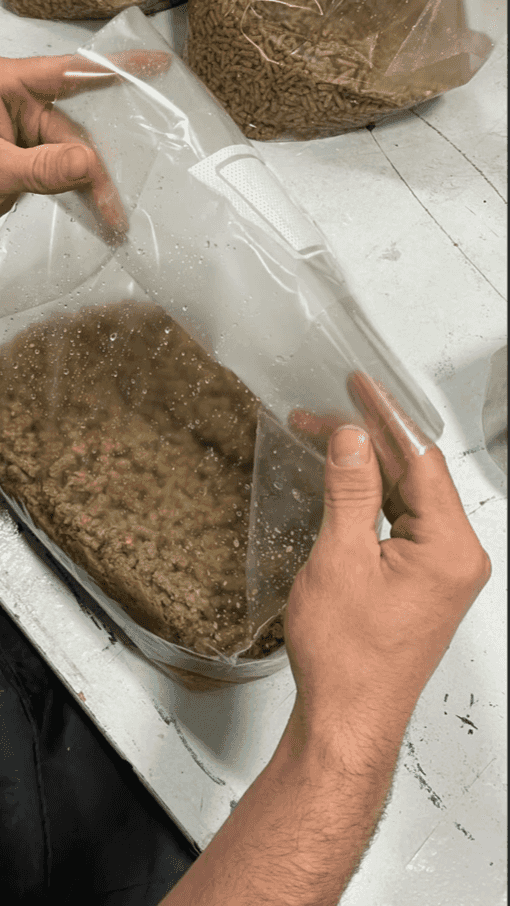
Hands hydrating a substrate block in its filter-patch bag
Hydrating a block. The filter patch is the white square.
2

Sterilize

The packed bags spend twenty-four hours in a heated steel drum. Heat reaches the centre of every block and removes the organisms already living in the ingredients. That gives the mushroom we choose a clean start instead of asking it to compete with mould or bacteria. The drum is plain equipment and the cycle is slow. We check the water, temperature and time, then leave the bags sealed while they cool. Opening one too early would undo the whole day’s work, so this step ends with waiting.

3

Inoculate

Once the centre of the block is cool, we add spawn: grain already covered in living mycelium from the variety we want to grow. This is the only moment the bag is open. Hands, tools and surfaces are clean, the opening stays close to filtered air, and the grain goes in quickly. The bag is sealed as soon as the spawn is distributed. A small amount is enough. From here, the mushroom does the multiplying. Our job is to give it time without giving anything else a way in.

4

Colonize

For roughly two weeks the sealed block sits in the dark. Fine white threads move outward from every grain of spawn, joining into one network through the hardwood and soy. Each day more of the brown substrate disappears behind white mycelium. We do not need to turn or open the bag. We look for even growth, a clean smell through the filter and no unexpected colour. When the whole block is firm and white, the mushroom has occupied its food and is ready for a change in conditions.

Why the dark

Mycelium does not need light to colonise a block. Darkness keeps the incubation room steady and lets us control the moment fruiting begins. The room is kept clean because every bag contains warm, damp food. Until the chosen mushroom has filled that food, an open seam or dirty tool can give mould the same opportunity.

5

Fruit

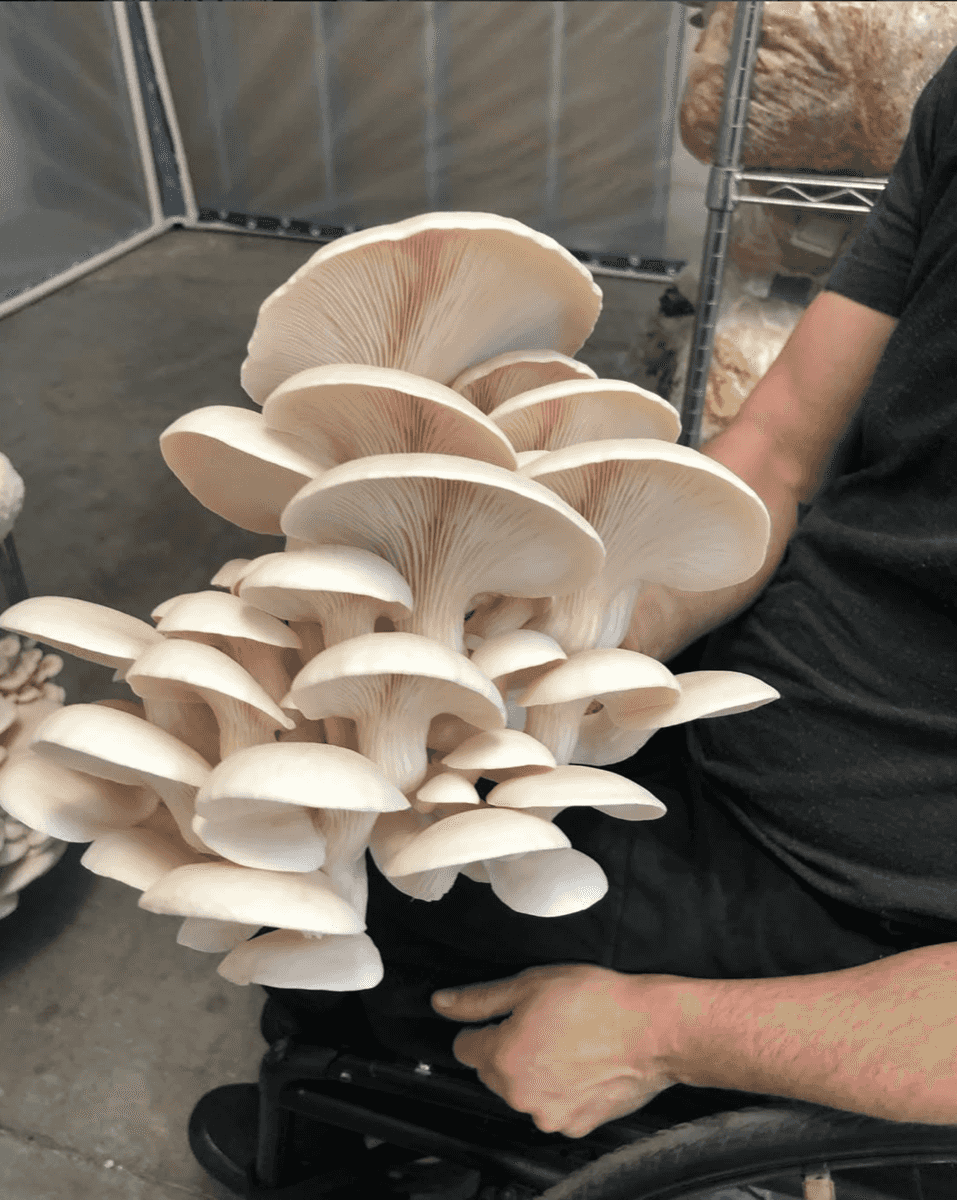
A colonised block moves into the fruiting room. We cut a precise opening in the bag, lower the temperature, raise humidity and give it fresh air and light. Those changes tell the network that it is time to make mushrooms. Tiny pins usually appear within a day or two. They already have the shape of the cluster that follows. Over the next three to five days the stems lengthen, caps widen and gills form underneath. We watch the edges of the caps more than the clock.

Pearl oyster cluster held in the humid fruiting room
Pearl oyster, day five.
6

Harvest

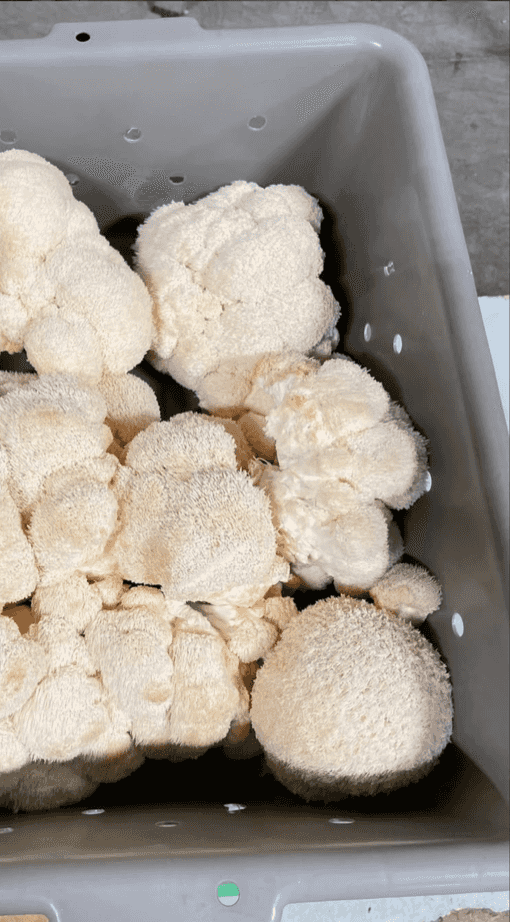
A cluster is ready when its caps have opened but the edges are still firm. We cut it from the block by hand, trim the base and place it in a harvest bin. That happens in the morning. The mushrooms are weighed, packed and kept cool for pickup or the delivery run later the same day. There is no warehouse step and no truck between farms. Timing the cut is why the weekly list changes: a mushroom is ready when the cluster says it is, not when a calendar box does.

Fresh lion’s mane mushrooms resting in a harvest bin
Lion’s mane, just cut.
7

Again

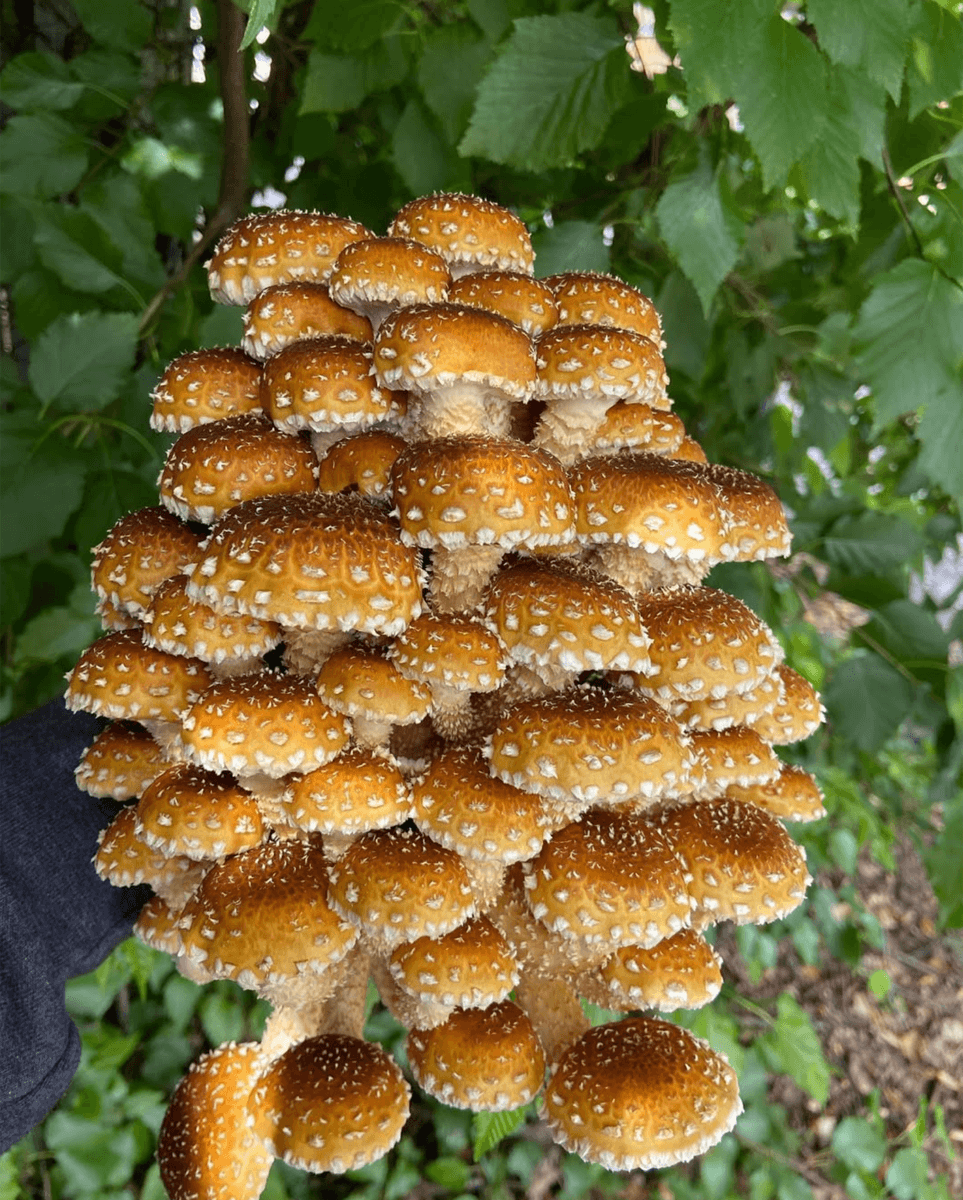
The opening stays in the bag after harvest. With another stretch of humidity and fresh air, the block can fruit again a week or two later. Most give two or three harvests, each usually smaller than the first. When the block is finished, the spent hardwood and soy go back into the ground. Then the shelf is cleaned and a new sealed bag takes its place. The process returns to the beginning: dry pellets, water, heat, grain, darkness and another short list of clusters ready that morning.

A chestnut mushroom cluster held outdoors among green leaves
Chestnut cluster, outside for a minute.

Two weeks, then five days

Day 1

Pins. Barely there. Each is a whole mushroom at one percent size.

Caps open. Gills form underneath.

Ready. Wider than a hand. Picked before lunch.

Fruiting this week

Updated Thursday, Sep 17

What is fruiting this week, with quantities where known
VarietyStatusQuantity
ChestnutFruiting nowabout 6 lb
Lion’s maneFruiting nowabout 4 lb
Pearl oysterNext week
Blue oysterNext week
King oysterResting
ShiitakeResting
Send an order request